Omar Khayyam: Mathematician, Philosopher, Poet of Doubt
The Scholar Who Sang of Wine and Mortality
Omar Khayyam (عمر خیام, 1048 to 1131) remains one of Persian literature’s most enigmatic figures, a mathematician and astronomer of the first rank who left behind a handful of quatrains that would captivate the world. Born in Nishapur during the Seljuk period, Khayyam lived in an age of intellectual ferment, when Persian courts patronized scholars and the Islamic world led in science and philosophy.
Unlike the professional poets of his era, Khayyam’s primary reputation rested on his scientific achievements. He reformed the Persian calendar with stunning accuracy, wrote treatises on algebra that influenced European mathematics, and contributed to geometric solutions of cubic equations. Poetry, for him, appears to have been a private philosophical exercise, a space where the rigorous scientist could voice doubts the theologians of his time would have found dangerous.
The Quatrain as Philosophical Fragment
Khayyam’s literary legacy centers on the rubāʿī (رباعی), or quatrain, a four-line verse form with an AABA or AAAA rhyme scheme. In Persian tradition, the rubāʿī served as a vehicle for pithy wisdom, sudden insight, or philosophical reflection. Khayyam elevated this compact form into an instrument of metaphysical questioning.
His quatrains possess a deceptive simplicity. In plain language, they ask the questions that haunt human consciousness: What lies beyond death? Why does divine justice permit suffering? Can we trust religious certainty, or should we embrace life’s immediacy? This directness gives Khayyam’s poetry its enduring power, and made it controversial among orthodox religious authorities.
The Moving Finger writes; and, having writ, Moves on: nor all thy Piety nor Wit Shall lure it back to cancel half a Line, Nor all thy Tears wash out a Word of it.
A Contested Canon
Scholarship around Khayyam’s poetry remains contentious. Of the thousands of quatrains attributed to him across various manuscripts, perhaps only a few dozen can be authenticated with confidence. Medieval Persian poets commonly circulated verses anonymously, and Khayyam’s reputation attracted numerous apocryphal compositions, especially in later centuries.
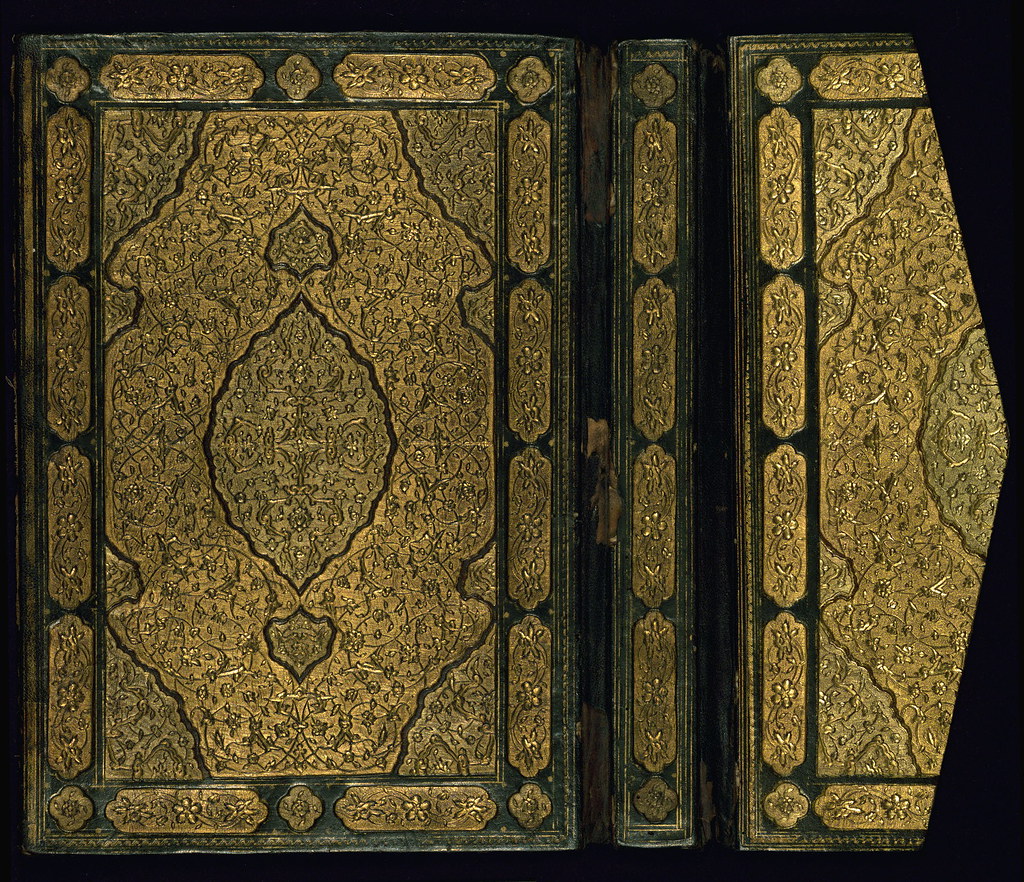
Edward FitzGerald’s 1859 English translation, The Rubáiyát of Omar Khayyám, brought Khayyam to world attention but took tremendous liberties. FitzGerald selected, arranged, and freely adapted the quatrains to create a coherent philosophical narrative that reflected Victorian anxieties as much as medieval Persian thought. His Khayyam became the voice of carpe diem hedonism and agnostic doubt, an image that oversimplified the original poet’s complexity.
Philosophy Between Wine and Prayer
Khayyam’s verses circle around several obsessive themes. Mortality haunts nearly every quatrain, the brevity of spring, youth’s swift passage, the inevitability of the grave. Against this darkness, he prescribes presence: wine, companionship, beauty, the immediate moment. Yet whether this constitutes hedonism or spiritual counsel remains ambiguous.
Some scholars read Khayyam as a Sufi poet whose “wine” symbolizes divine intoxication, whose tavern represents the threshold of mystical knowledge. Others see a rationalist skeptic who questioned religious orthodoxy and embraced materialist acceptance. The truth likely encompasses both readings. Khayyam wrote in an intellectual milieu where scientific reason and mystical seeking coexisted, where doubt could be a spiritual practice.
His deterministic view (that fate writes our stories before we live them) appears throughout his work, often with an undertone of protest. If the divine predetermined our actions, how can we be justly punished? This question, dangerous in medieval Islamic context, Khayyam posed repeatedly.
An Eternal Contemporary
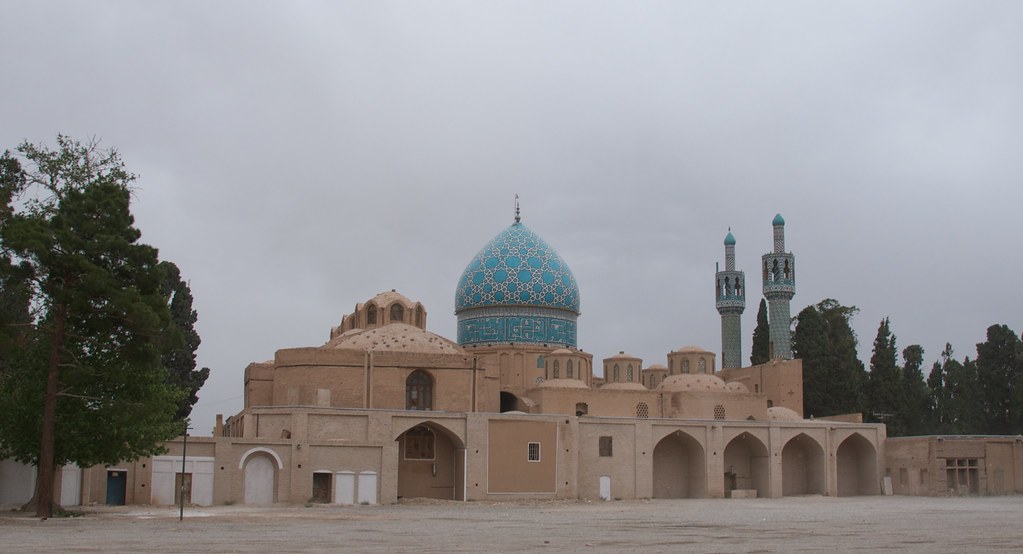
Khayyam’s influence extends far beyond Persian literature. FitzGerald’s Rubáiyát became one of the most popular poetry books in English, influencing Victorian and Edwardian culture profoundly. Artists, composers, and writers drew on its imagery. In Iran itself, Khayyam remains beloved, his tomb in Nishapur a pilgrimage site.
What makes Khayyam feel contemporary is his refusal of easy answers. In an age of competing certainties, his quatrains preserve a space for doubt, wonder, and the acknowledgment of mystery. He reminds us that questions matter as much as answers, that uncertainty can coexist with joy, and that our brief moment under the wheeling stars deserves attention, presence, and perhaps a cup of wine shared with friends.
For diaspora readers especially, Khayyam offers a Persian voice that speaks across cultures, philosophical without being prescriptive, spiritual without demanding orthodoxy, deeply Iranian yet universally human.