The Heart (Del) as the Seat of Divine Love in Persian Poetry
Del: More Than a Metaphor
Every literary tradition that has grappled with love has given special importance to the heart. But in Persian classical poetry, the heart (دل, del, also spelled dil) occupies a position that is categorically different from its role in Western literature. It is not merely a symbol of emotion, not a seat of sentiment, and not simply the organ of romantic attachment. In the Persian Sufi tradition, del is an ontological center, the deepest and most real part of the human being, the only faculty capable of encountering the divine.
To read Rumi, Hafez, Attar, or Shabestari without understanding what del means to them is to miss the central architecture of their poetry. Emotions appear in the del, yes, but so does divine light. The beloved is received there. God is reflected there. And it is there, in the del, that the annihilation of the self and the emergence of something transcendent takes place.
The Mirror of the Divine
The most influential image associated with del in Persian mystical poetry is the mirror (ayneh). A polished mirror reflects perfectly. A tarnished or cracked mirror distorts. The human heart, in its ordinary condition, is tarnished by desire, pride, and worldly attachment. The task of the spiritual path is to polish the del until it becomes capable of reflecting the divine light without distortion.
This image draws on a rich philosophical tradition. The Sufi master Ibn Arabi (1165 to 1240 CE) taught that the human being is the “mirror of God,” the only created entity capable of reflecting all the divine attributes simultaneously. Persian poets translated this metaphysical claim into lyric terms. Mahmud Shabistari (1288 to 1340 CE), in his celebrated Gulshan-i Raz (Rose Garden of Mystery), frames the entire work as a meditation on this reflective capacity:
به نام آن که جان را فکرت آموخت چراغ دل به نور جان برافروخت
“In the name of the one who taught the soul to think, who lit the lamp of the heart with the light of the spirit.”
The cheragh-e del (lamp of the heart) is not a decorative image. It is a technical one. For Shabistari, the heart is literally the lamp in which divine light burns. The noor-e jan (light of the soul) that fuels it is not something the individual produces but something received, poured into the del from a source beyond the self. The act of reading, studying, or praying is, in this framework, an act of preparing the del to receive and hold this light.
Rumi and the Heart That Speaks
Jalal al-Din Rumi (1207 to 1273 CE) wrote more extensively about the del than perhaps any other poet in the Persian tradition. For Rumi, the heart is not passive. It is a speaking, suffering, longing presence. It is, above all, the organ of ishq (divine love), the place where love registers with its full, devastating force.
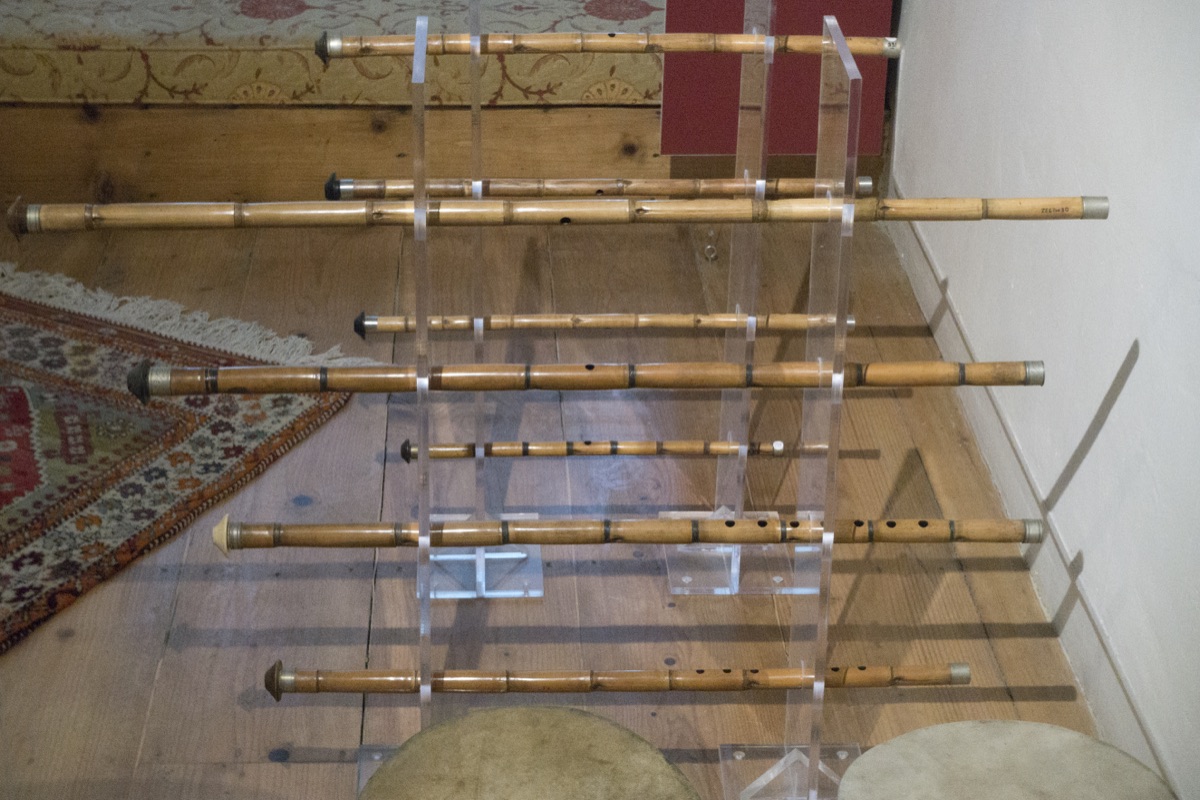
The opening lines of the Masnavi establish this immediately. The reed (ney) that cries out in separation is explicitly an image of the heart separated from its divine source:
بشنو این نی چون شکایت میکند از جداییها حکایت میکند کز نیستان تا مرا ببریدهاند در نفیرم مرد و زن نالیدهاند
“Listen to this reed, how it tells of separations, how it recounts the story of partings. Since they cut me from the reed bed, men and women have wept at my cry.”
The reed bed (neystaan) is the divine source. The cutting (ببریدهاند, “they have cut”) is the act of creation itself, the moment when individual existence separated from divine unity. The reed’s music, which moves everyone who hears it, is the del in its natural condition: longing, crying, drawing others into its longing. The heart, for Rumi, is not a private possession. Its longing resonates outward and touches every other longing heart, because all hearts share the same original wound.
Rumi presses further into this wound deliberately:
سینه خواهم شرحه شرحه از فراق تا بگویم شرح درد اشتیاق
“I want a chest torn open by separation, so I can describe the pain of longing.”
The word sina (سینه), meaning chest or breast, here stands in for the del it houses. Rumi does not want a healed heart, a composed heart, or a heart at peace. He wants the tear, the opening, because only from within that opening can the truth of longing be spoken. This is one of the most counterintuitive and characteristic moves in Persian Sufi poetics: the wound is the gift. The broken heart is more open to the divine than the whole, guarded, self-sufficient one.
Hafez and the Heartbreak That Opens
No poet made the broken del more central to his poetics than Hafez (1315 to 1390 CE). His Divan is saturated with images of the shattered, captive, wandering heart. And yet in Hafez, heartbreak is never simply tragic. It is always simultaneously a sign of spiritual life, evidence that the del has been genuinely touched by ishq.
His most famous opening verse announces this immediately:
الا یا ایها الساقی ادر کأسا و ناولها که عشق آسان نمود اول ولی افتاد مشکلها
“Come, cup-bearer, pass the wine around, for love seemed easy at first, but then came difficulties.”
The “difficulties” (mushkil-ha) that follow love’s initial ease are precisely the experiences of the del as it is broken open. Each difficulty is, in Hafez’s framework, an occasion for deeper spiritual growth. The cup-bearer (saqi) who brings wine (the wine of divine love, in the mystical reading) is serving the del what it most needs, not comfort, but the intoxication that dissolves its false certainties.
Hafez also understood that the del can be lost, given away, or stolen. The image of the stolen heart runs throughout his poetry:
اگر آن ترک شیرازی به دست آرد دل ما را به خال هندویش بخشم سمرقند و بخارا را
“If that Shirazi Turk would take our heart in hand, I would give Samarkand and Bukhara for the dark mole on her face.”
On the surface, this is the most extravagant of love poems, the speaker willing to sacrifice the two greatest cities of the medieval Islamic world for a single feature of a beloved’s face. But the del that is “taken in hand” by the beloved is also the del surrendered to the divine. The giving away of the heart is not a loss but a liberation: the del that has been captured by the beloved is no longer trapped in the prison of the ego-self.
Attar and the Heart’s Longing Face
Farid al-Din Attar (1145 to 1221 CE) approaches the del from the angle of longing (ashtiaq). For Attar, the heart’s defining quality is its orientation: it is always turned toward something. The question is whether that orientation is toward the transient or toward the eternal. When the del is truly awakened to ishq, it turns toward the divine with an urgency that makes everything else pale:
ز آرزوی روی تو در خون گرفتم روی از آنک نیست جز روی تو درمان چشم گریان مرا
“From longing for your face I have bathed my own face in blood, for nothing but your face can heal my weeping eye.”
The image of the weeping eye whose only cure is the beloved’s face is a compressed statement of the del’s entire condition. The del suffers in separation. The cause of the suffering is also the only possible remedy. There is no healing outside the beloved. This is not masochism but a precise description of what the Sufis understood as the soul’s absolute dependence on the divine: the del cannot cure itself, cannot satisfy itself, cannot rest in anything less than the divine face.
Del and Adab: The Heart’s Proper Orientation
Rumi understood that the del’s capacity to receive divine light depended not only on love but on proper orientation, what the Sufi tradition calls adab (courtesy, or spiritual etiquette). A heart full of pride or heedlessness cannot reflect the divine, no matter how intense its desire. He writes in the Masnavi:
از خدا جوییم توفیق ادب بیادب محروم گشت از لطف رب
“From God we seek the grace of proper orientation, for the discourteous one is cut off from the Lord’s grace.”
Adab here is not mere politeness. It is the internal disposition of the del: open, humble, attentive, willing to receive rather than demand. The heart that has been polished by spiritual practice and softened by ishq is a heart in a state of adab. It does not shout its demands at the divine; it listens, it waits, it opens.
The Heart in Contrast: West and East
It is worth pausing to consider how differently the heart functions in Western poetic traditions, particularly from the Renaissance onward. In the European lyric, the heart is primarily the seat of individual emotional life. It aches, it rejoices, it breaks, and its breaking is essentially a private catastrophe. Even in Christian mystical writing, where the heart gains theological depth (Augustine’s “our heart is restless until it rests in Thee”), it tends to remain a psychological rather than ontological category.
The Persian del is something different. It is porous where the Western heart is bounded. It is communal where the Western heart is private. When Rumi says the reed’s cry causes all men and women to weep, he is making a claim about the del that has no Western equivalent: that the longing of one awakened heart can enter and resonate within every other, because all hearts share the same wound, the same separation, the same orientation toward the divine.
This is why Persian mystical poetry can feel, to contemporary readers, simultaneously deeply personal and strangely universal. The del it describes is yours, but it is also everyone’s. The longing it expresses is particular, but it points to something that has nothing to do with individual circumstance.
The Heart’s Journey
The final word on del in Persian poetry might be this: it is not a static location but a process. The del moves. It longs, it reaches, it breaks, it opens, it is filled with light, it is emptied again. It passes through the seven valleys of Attar’s Mantiq al-Tayr as the birds pass through them: with difficulty, with fear, with moments of extraordinary clarity.
What the great Persian poets discovered, and what they preserved in their verses, is that this movement of the del is not aimless. The heart’s restlessness has a direction. Its longing has an object. And the breaking it endures along the way is not destruction but preparation, the necessary opening of a lamp that is being fitted to receive a very great light.
To read Persian classical poetry with the del at the center is to read it in the way it was written: as a map of the heart’s journey toward its source, drawn by those who had traveled far enough to know the way.