What is Ishq? Divine Love in the Persian Sufi Tradition
The Word That Changed Everything
Few words in any literary tradition carry as much freight as the Persian term ishq (عشق). Borrowed from Arabic, it entered Persian verse in the ninth and tenth centuries and was almost immediately charged with meanings that went far beyond its lexical origins. Where the Arabic hubb (حب) denotes love in its general, socially intelligible sense, ishq came to name something categorically different: a love so absolute, so consuming, and so indifferent to personal survival that the mystics could use it as a synonym for the divine encounter itself.
Understanding ishq is not merely a matter of literary history. It is, for any serious reader of Persian poetry, the single most important conceptual key. Rumi, Hafez, Attar, Sanai, and Shabestari all built their major works around this word and around the questions it raises. What kind of love obliterates the lover? What relationship does the annihilated self have with the divine? And why should a tradition of extraordinary intellectual sophistication choose the vocabulary of passion and intoxication to describe the encounter with God?
Ishq and Hubb: A Crucial Distinction
Classical Islamic philosophy inherited from Greek sources a ranked vocabulary of love. Plato’s Eros and Aristotle’s philia entered Arabic thought through translation, and the theologians developed careful distinctions between grades of affection. Hubb sat comfortably within this rational framework. It could be measured, discussed, made subject to jurisprudence, and fitted into the categories of ethics and social life.
Ishq refused all of this. The tenth-century philosopher Ibn Sina wrote a famous treatise on love (Risala fi’l-ishq) in which he tried to domesticate ishq within a Neo-Platonic cosmology, arguing that all things participate in a universal love oriented toward the divine. The Sufi poets absorbed this philosophical backdrop but then pushed far beyond it. For the mystics, ishq was not a cosmological principle to be analyzed but an overwhelming personal experience to be endured, celebrated, and ultimately surrendered to.
Farid al-Din Attar (1145 to 1221 CE), in his Conference of the Birds, treated ishq as the very element the soul is made of, the thing that both tortures and fulfills it:
ای مرا یک بارگی از خویشتن کرده جدا گر بدآن شادی که دور از تو بمیرم مرحبا
“O you who have torn me wholly from myself, if that gladness means I die far from you, then welcome.”
The paradox is total and deliberate. The beloved has caused a separation that is also, somehow, a welcome. The lover does not mourn the loss of self but greets it. This is ishq in its purest Sufi form: a love that does not seek union on the lover’s terms but accepts whatever the beloved decrees, including annihilation.
The Architecture of Divine Love
Persian Sufi thought organized its account of divine love around a set of interlocking concepts. The ashiq (عاشق), the lover, is the soul still encased in its individual identity. The mashuq (معشوق), the beloved, is the divine reality, often called the face of God, the eternal beauty, or simply the Friend. Between them lies the whole drama of mystical experience: longing, approach, trial, and finally fana (فنا), the annihilation of the self in the divine.
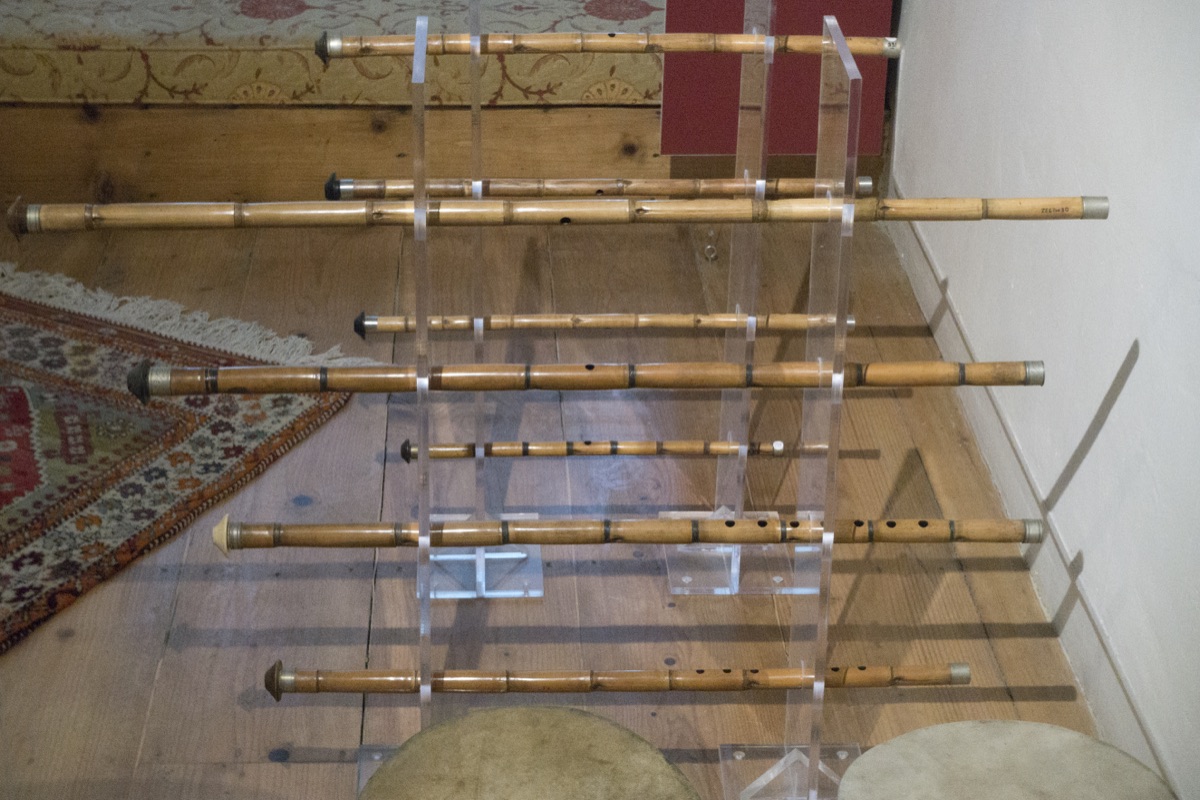
What makes Persian poetry so remarkable is that this metaphysical architecture never becomes abstract. The poets insisted on grounding it in sensory, emotional experience. When Jalal al-Din Rumi (1207 to 1273 CE) opens the Masnavi with the image of the reed flute, he is giving ishq a sound:
بشنو این نی چون شکایت میکند از جداییها حکایت میکند
“Listen to this reed, how it tells of separations, how it recounts the story of partings.”
The reed was cut from the reed bed. Its music, which enchants everyone who hears it, is nothing other than the cry of its own severance. The soul, Rumi tells us, is exactly like this. Our longing, our restlessness, our capacity for beauty and grief, all of it is the echo of an original separation from the divine source. Ishq is the name for that cry. It is not a sentimental feeling but a cosmological condition.
Rumi continues, deepening the image:
سینه خواهم شرحه شرحه از فراق تا بگویم شرح درد اشتیاق
“I want a chest torn open by separation, so I can describe the pain of longing.”
The word ashtiaq (اشتیاق) here, often translated as longing or yearning, is ishq’s closest companion. Where ishq names the consuming fire, ashtiaq names the ache of distance. Together they constitute the complete emotional phenomenology of the mystical lover. Rumi is not satisfied with polished verse about love. He wants the wound itself, the raw, unmediated experience of absence, because only from within that experience can the truth of ishq be told.
Hafez and the Tavern of Love
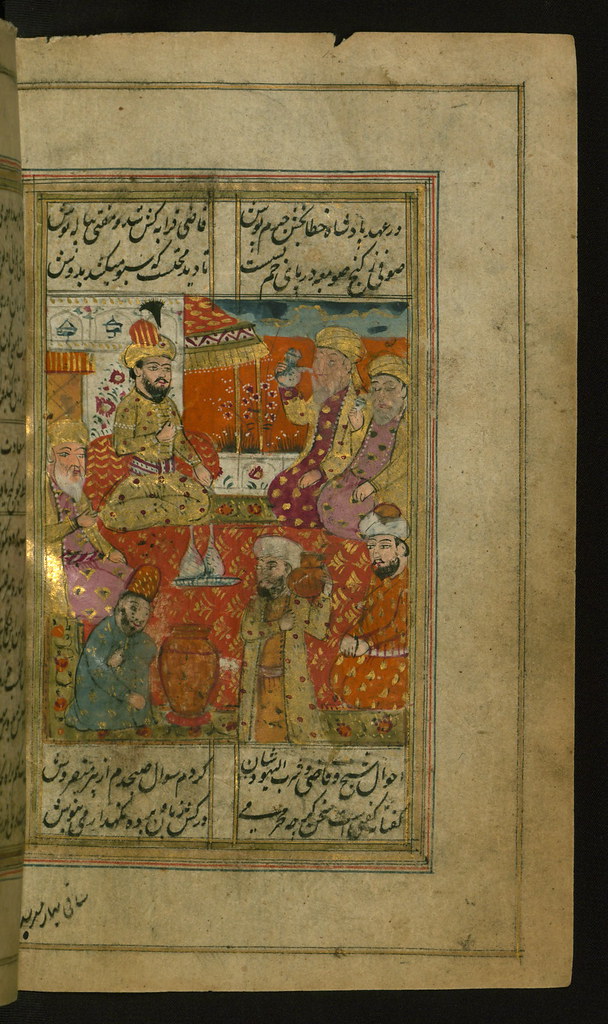
No poet made ishq more paradoxical, more beautiful, or more difficult to interpret than Shams al-Din Muhammad Hafez of Shiraz (1315 to 1390 CE). Where Rumi and Attar wrote from within explicitly mystical frameworks, Hafez chose a more oblique approach. His Divan speaks endlessly of wine, taverns, beautiful beloveds, and the hypocrisy of religious scholars, and scholars have debated for centuries whether these images are mystical allegories, celebrations of literal pleasure, or something that refuses either category.
What is beyond dispute is that Hafez understood ishq as the one force capable of dissolving all false certainties. The famous opening of his most celebrated ghazal makes this explicit:
الا یا ایها الساقی ادر کأسا و ناولها که عشق آسان نمود اول ولی افتاد مشکلها
“Come, cup-bearer, pass the wine around, for love seemed easy at first, but then came difficulties.”
The Arabic opening line, drawn from pre-Islamic poetry, signals immediately that Hafez is working on multiple registers at once. The saqi (cup-bearer) who pours wine in the mystical tradition is the spiritual guide who pours out the divine wisdom that intoxicates the soul. The wine itself is ishq in liquid form. And the admission that love “seemed easy at first but then came difficulties” is one of the most honest lines in all of Persian literature. The mystical path is not comfortable. Ishq does not simply elevate the soul; it breaks it open.
The difficulty Hafez refers to is precisely the process of ego-dissolution. The self wants to love God on its own terms, to remain intact while also enjoying divine proximity. Ishq refuses this bargain. It demands everything.
Attar and the Seven Valleys
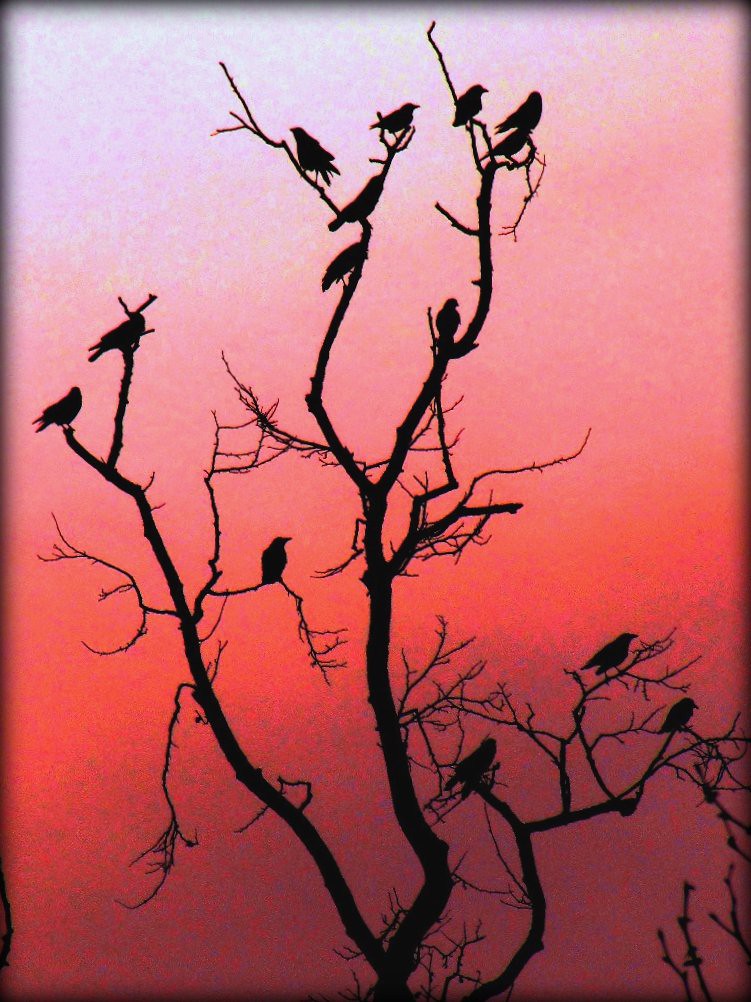
Attar’s Mantiq al-Tayr (Conference of the Birds) provides the most systematic map of ishq’s demands in Persian literature. The birds, representing souls, must cross seven valleys to reach the Simurgh (the divine). The second valley, the Valley of Love (Vadi-ye Ishq), is explicitly the domain of ishq. Attar’s description of it is worth dwelling on: in this valley, reason is left behind, everything ordinary is burned away, and the soul discovers that ishq is not a means to something else but the very nature of reality.
Attar writes of the lover’s condition with devastating directness:
از می عشقت چنان مستم که نیست تا قیامت روی هشیاری مرا
“From the wine of your love I am so drunk that there is no path back to sobriety until the Day of Judgment.”
The phrase “until the Day of Judgment” is theologically loaded. For Attar, the intoxication of divine love is not a temporary altered state but a permanent reorientation of the soul. Once truly struck by ishq, the lover is changed in a way that cannot be reversed. This is why the Sufi poets so consistently describe ishq in the vocabulary of fire and burning: these are processes that do not undo themselves.
The Philosophical Foundations
Behind the poetry lay a rigorous intellectual tradition. The great Sufi theorist Ibn Arabi (1165 to 1240 CE) developed the concept of wahdat al-wujud (unity of being), in which all apparent multiplicity is understood as manifestations of a single divine reality. Within this framework, ishq becomes the dynamic principle through which the One recognizes itself in the many. Human love, at its deepest level, is God loving God through created forms.
Persian poets absorbed this metaphysics and transformed it into lived lyric experience. The technical philosopher says “the beloved is a manifestation of divine beauty.” Hafez says: if that Shirazi Turk took my heart, I would give Samarkand and Bukhara for a single beauty mark on her face. The philosophical content is identical. The emotional impact is worlds apart. This gap between abstract doctrine and burning lyric is exactly the space that ishq occupies in Persian poetry.
Why Ishq Still Matters
For contemporary readers approaching Persian classical poetry, the concept of ishq offers something that few modern literary traditions can match: a complete account of love as a transformative, potentially cosmic experience that does not reduce to psychology, biology, or social function.
The Persian poets were not naïve. They lived in complex, often dangerous social worlds. Hafez composed under the scrutiny of both political rulers and religious authorities. Attar was reputedly martyred. Rumi lost his most beloved friend and teacher, Shams of Tabriz. Their ishq was not an escape from reality but an engagement with it at the most fundamental level.
What they found, and what they passed down through their verses, is the possibility that the consuming, annihilating love they called ishq is not a deviation from normal life but its deepest truth: that behind every authentic longing, every act of genuine love, something moves that is larger than the individual self, something that the Persian tradition had the courage, and the vocabulary, to call divine.
To read Rumi, Hafez, or Attar with any depth is to encounter this possibility again and again, dressed in different images, spoken in different voices, but always pointing toward the same blazing center.